Climate change is increasing the risk of slower games and reduced player performance at nearly every 2026 World Cup match
PR Newswire
PRINCETON, N.J., June 3, 2026
Climate Central finds climate change has increased the likelihood of heat that could slow players for 97 of the 104 matches, threatening game speed and fan safety.
PRINCETON, N.J., June 3, 2026 /PRNewswire/ -- Climate change is increasing the likelihood of performance-impairing heat during the 2026 FIFA World Cup, according to a new Climate Central analysis. By examining the odds of temperatures exceeding 82.4°F (28°C) — a threshold linked to declines in player performance — researchers found that 97 of the 104 scheduled matches now face a higher probability of encountering these conditions.
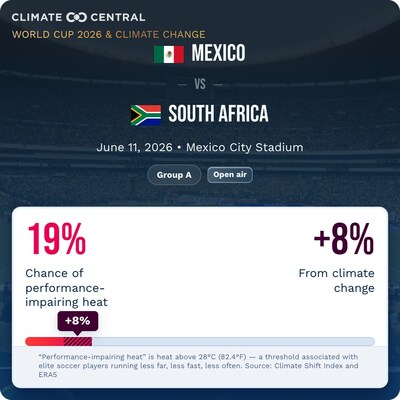
Previous research shows temperatures above 82.4°F can reduce sprint frequency, total distance covered, and recovery time, impacting not only player performance and safety, but also match tempo, tactics, and overall style of play.
Analysis Highlights:
- 97 of 104 scheduled matches are more likely to experience performance-impairing heat because of climate change
- Nearly half of the matches have at least a 50% likelihood of experiencing heat that can impair performance. In 26 of those matches, climate change increases the likelihood by at least 10 percentage points.
- Among all matches, climate change boosts the odds of performance-impairing heat most during the June 26 match in Guadalajara between Uruguay and Spain. The 70% chance of such heat during that match is 37 percentage points higher due to climate change.
As global temperatures continue to rise, driven by the burning of fossil fuels, the 2026 World Cup could become another example of how climate change can disrupt sports and traditions people cherish, forcing a reevaluation of how the game is played.
Explore climate risk across all scheduled matches through our World Cup interactive hub here: https://www.climatecentral.org/world-cup-2026
Review the full analysis here: https://www.climatecentral.org/climate-matters/world-cup-matches
Sign up for weekly World Cup climate coverage, delivered every Tuesday with insights on the matches most impacted by climate change: https://www.climatecentral.org/world-cup-signup
Methodology:
Climate Central analyzed the dates and locations of all scheduled matches in the 2026 FIFA World Cup and calculated the likelihood of temperatures exceeding 82.4°F (28°C), a threshold associated with declines in soccer/football athlete performance. The analysis compared current climate conditions influenced by human-caused climate change with a counterfactual world without climate change to determine how global warming altered the likelihood of performance-impairing heat at each match.
Quotes for publication:
Morten Thorsby, playing at the World Cup 2026 as part of the Norwegian national team, said:
"This analysis makes clear that rising temperatures are not only a serious health risk for players and fans, but they are also starting to affect the quality of the game itself. When heat impacts sprinting, recovery, and overall intensity, it changes the way football is played - and not for the better. That's exactly why I signed the players' letter to FIFA last week. We need to take these risks seriously and ensure that the game we love is protected, both for those on the pitch and everyone watching around the world."
Professor Mike Tipton, Extreme Environments Laboratory, School of Psychology, Sport, and Health Sciences at the University of Portsmouth:
"Playing in temperatures above 28°C changes the game - affecting tactics, tempo and overall quality. We see reduced intensity, less sprinting and potentially fewer chances being created. As temperatures climb further, the risks also increase. Prolonged exposure and dehydration can lead to heat exhaustion or even heat stroke, particularly in high-stakes matches where players are more likely to push beyond their natural limits."
Shel Winkely, meteorologist at Climate Central, said:
"The World Cups of the past won't happen again — not because the players have changed, but because the planet has. Heatwaves, unpredictable weather, and shifting seasons are rewriting the rules of the games we love. Athletes are forced to play more cautiously, strategize differently, and abandon the risks that once made sport thrilling. Unless we stop burning fossil fuels, the future of competition won't be about who plays best — it'll be about who can tolerate the heat."
Alex Jacobs, professional player formerly with the Jamaican Premier League:
"Heat is not new. But extreme heat — made more likely by heat-trapping pollution driving climate change — might just be a difference maker in this summer's edition of the biggest sporting event on the planet."
John Toohey-Morales, Honorary Member of the American Meteorological Society, said:
"In football (soccer), a typical midfielder runs well over a 10K (6 miles) for each match. And it's a high-intensity effort, with directional changes and short bursts of acceleration. Climate Central's analysis shows how these elite athletes will likely be slowed by hotter temperatures which are being boosted by climate change."

 View original content to download multimedia:https://www.prnewswire.com/news-releases/climate-change-is-increasing-the-risk-of-slower-games-and-reduced-player-performance-at-nearly-every-2026-world-cup-match-302789927.html
SOURCE Climate Central

