HOUSTON, TX, Dec. 30, 2025 (GLOBE NEWSWIRE) -- This article is for informational purposes only. It is not medical advice. Always consult a qualified healthcare professional before starting supplements. If you purchase through links in this article, a commission may be earned at no additional cost to you.
Consumer Evaluation Criteria for Methylene Blue Supplements Have Shifted Toward Verification and Transparency
The methylene blue supplement category has experienced significant growth in consumer interest, with search activity rising sharply over recent years. As buyers increasingly research this century-old compound for its studied role in cellular energy and cognitive support, a parallel shift has emerged: consumers are no longer simply asking which products exist, but which verification standards separate pharmaceutical-grade formulations from industrial or laboratory alternatives unsuitable for human consumption.
The heightened interest has been fueled by discussion on popular wellness podcasts, coverage from longevity researchers, and growing consumer curiosity about cellular energy optimization. The biohacking community has embraced methylene blue as a subject of interest, with social media platforms documenting thousands of posts from users exploring the category. Brands like Earth Harmony Methylene Blue Drops have responded to this demand by publishing detailed manufacturing disclosures that address the verification criteria informed buyers now apply.
This surge in popularity has created challenges for consumers attempting to distinguish USP pharmaceutical-grade products designed for human consumption from industrial or laboratory-grade alternatives that may contain contaminants, heavy metals, or impurities. The resulting confusion has elevated the importance of understanding quality verification standards before evaluating any product in this category.
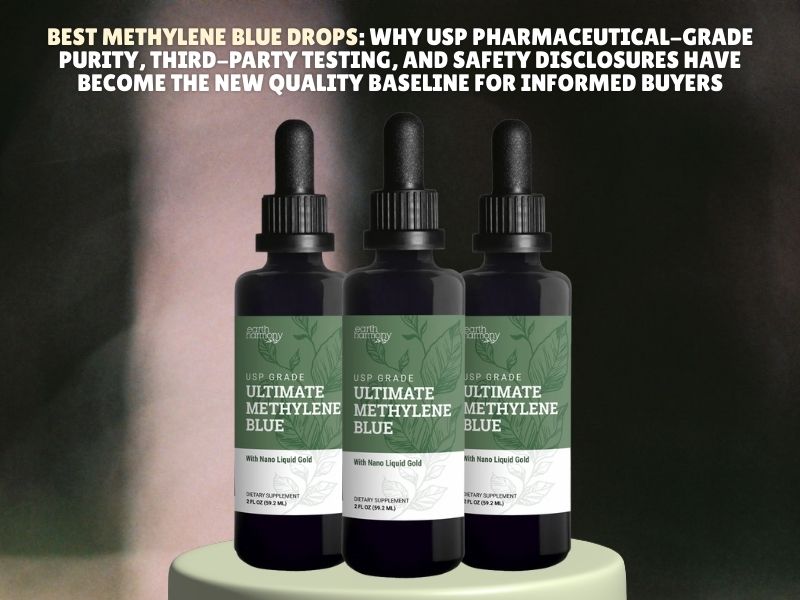
In this analysis, "best" does not refer to superiority over other products or brands. Instead, it reflects the specific quality, safety, and transparency criteria that consumers, researchers, and healthcare-informed buyers increasingly apply when evaluating methylene blue drops, based on publicly available manufacturing disclosures, regulatory standards, and ingredient-level research.
What Is Methylene Blue: Historical Context and Regulatory Status
Methylene blue, also known as methylthioninium chloride, is a synthetic compound with a rich history spanning nearly 150 years. After its initial development in 1876 as a fabric dye, researchers discovered it could stain biological tissues and kill the parasite responsible for malaria. This discovery made methylene blue one of the first synthetic drugs used in modern medicine.
Today, the FDA approves methylene blue as a prescription treatment for methemoglobinemia, a rare blood disorder where hemoglobin loses its ability to carry oxygen effectively. Methylene blue also has an established history in clinical settings, including FDA-approved prescription formulations used for specific medical indications under medical supervision.
The distinction between prescription methylene blue administered under medical supervision and methylene blue sold as a dietary supplement is important for consumers to understand. Prescription formulations are FDA-regulated drugs used for specific medical conditions. Dietary supplements containing methylene blue are not FDA-approved for treating any disease and are regulated differently under the Dietary Supplement Health and Education Act.
This analysis focuses on methylene blue as it appears in the dietary supplement category, not its prescription medical applications.
Ingredient-Level Research: What Studies Have Explored
Understanding what research has examined regarding methylene blue requires separating ingredient-level scientific investigation from finished product claims. The compound has been studied in laboratory and clinical settings, though much of this research involves specific contexts rather than general supplementation.
At the cellular level, methylene blue functions as an alternative electron carrier within the mitochondrial electron transport chain. The mitochondrial electron transport chain is the cellular machinery responsible for producing adenosine triphosphate, which serves as the fundamental energy currency powering cellular processes.
Research published in peer-reviewed journals has explored methylene blue's behavior in various experimental contexts. A study published in Radiology examined brain activity patterns in healthy adults who received methylene blue. Research published in Progress in Neurobiology has explored the neurometabolic mechanisms that researchers hypothesize may underlie observed effects in experimental settings.
The compound's ability to cross the blood-brain barrier has made it a subject of interest in neuroscience research. Studies have examined its potential effects in laboratory cell cultures and animal models investigating various conditions.
This research is ingredient-level and does not evaluate finished dietary supplements. These studies do not establish that any commercial methylene blue supplement will produce specific effects in individuals who consume them.
For those researching this category, view the current Earth Harmony methylene blue offer (official Earth Harmony page) to examine one example of how manufacturers present product information.
Safety Considerations and Contraindications: What Consumers Should Know
Before evaluating any methylene blue supplement, understanding the established safety considerations is essential. This compound has documented interactions and contraindications that informed consumers research before making decisions about this category.
Serotonin Syndrome and Medication Interactions:
FDA-approved methylene blue prescription products include boxed warning language regarding serotonin syndrome risk when used with serotonergic medications. For readers seeking primary-source context, the FDA has published safety communications regarding methylene blue and serotonergic drug interactions. Methylene blue acts as a monoamine oxidase inhibitor, particularly MAO-A. The combination with medications that affect serotonin levels has been associated with serotonin syndrome, a serious condition that has been documented in medical literature.
Medications that have documented interactions with methylene blue include selective serotonin reuptake inhibitors, serotonin-norepinephrine reuptake inhibitors, tricyclic antidepressants, monoamine oxidase inhibitors, certain pain medications, migraine medications in the triptan class, and some antibiotics with MAOI properties.
Signs of serotonin syndrome documented in medical literature include confusion, agitation, rapid heartbeat, elevated blood pressure, dilated pupils, muscle changes, excessive sweating, diarrhea, and fever.
G6PD Deficiency:
Individuals with glucose-6-phosphate dehydrogenase deficiency represent a population for whom methylene blue is contraindicated according to medical literature. This genetic enzyme disorder affects approximately 400 million people worldwide, with higher prevalence among individuals of African, Mediterranean, Middle Eastern, and Southeast Asian descent.
Additional Populations Noted in Safety Literature:
Medical and regulatory sources note additional populations for whom methylene blue may not be appropriate, including pregnant or nursing women, individuals with kidney impairment, and those using substances with serotonergic or MAOI properties.
This information is educational. Individuals should consult qualified healthcare professionals regarding their specific circumstances.
Why USP Pharmaceutical-Grade Standards Have Become a Consumer Evaluation Criterion
One factor that has emerged as consumers research methylene blue supplements involves distinguishing between different product grades available in the marketplace.
Methylene blue is available in various grades for different applications. Industrial-grade and laboratory-grade products are manufactured for applications such as textile dyeing and aquarium treatment. These products are manufactured to different standards than those intended for human consumption.
USP pharmaceutical-grade designation indicates that a product meets standards established by the United States Pharmacopeia, including testing protocols for identity verification, potency confirmation, purity assessment, and contaminant screening. These methylene blue supplement quality standards have become increasingly important to consumers navigating this category.
Third-party testing provides additional verification that finished products meet claimed specifications. This testing can verify identity, potency, purity, and absence of specific contaminants for production batches.
Consumers researching this category increasingly examine these quality indicators when evaluating products. The distinction between USP-grade methylene blue drops and other grades has become a central part of the evaluation criteria informed buyers apply.
How Consumers Evaluate Methylene Blue Supplement Quality Standards
As the methylene blue supplement category has expanded, consumers have developed increasingly specific criteria for evaluating products before purchase. Understanding these evaluation factors may assist those researching pharmaceutical-grade methylene blue options.
Consumers often look for identity testing documentation that confirms the product contains the compound claimed on the label. Methylene blue purity testing and contaminant screening for heavy metals, residual solvents, and formaldehyde represent additional factors buyers examine. Some consumers research whether brands provide Certificates of Analysis upon request, as this documentation can offer batch-level verification.
Manufacturing transparency has become another evaluation criterion, with consumers examining whether companies disclose facility certifications, geographic manufacturing location, and quality control protocols. The prominence and completeness of safety disclosures, particularly regarding the methylene blue boxed warning for serotonergic drugs and G6PD contraindication, also factor into how informed buyers assess products in this category.
These evaluation criteria reflect the broader trend toward consumer due diligence in supplement categories where quality variation exists across the marketplace.
Earth Harmony as a Reference Case: Publicly Available Manufacturing Disclosures
As one example of how brands are responding to rising consumer scrutiny around quality standards, Earth Harmony's publicly available disclosures illustrate the type of information consumers now examine when researching this category.
According to Earth Harmony's published disclosures, the company's liquid methylene blue formula contains 99.99% USP pharmaceutical-grade methylene blue at a concentration of 10 mg per mL. The company states the product is formaldehyde-free.
Publicly available information from Earth Harmony indicates the product is manufactured in Phoenix, Arizona at facilities the company describes as holding cGMP and ASI certification. The company states that products undergo third-party testing.
According to the brand's published information, the formula is described as vegan-friendly, gluten-free, non-GMO, and sugar-free. The company states the glass bottle packaging helps protect contents from light degradation.
The company also states it offers a capsule format in addition to liquid drops. According to Earth Harmony's published disclosures, the capsule formulation combines USP-grade methylene blue with additional ingredients including Vitamin C and a plant-based blend.
View the current Earth Harmony methylene blue offer (official Earth Harmony page) to examine the company's complete published product information.
These are company-provided disclosures. This analysis does not independently verify these claims or endorse this product.
Format Comparison: Liquid Drops and Capsules in the Methylene Blue Category
The methylene blue supplement category includes products in various delivery formats. Understanding the general characteristics of different formats may assist consumers researching this category.
Liquid Drops:
Liquid formats are common in the methylene blue supplement category. Liquid supplements generally bypass the dissolution step required for solid forms. Liquid formats may allow for measurement flexibility compared to fixed-dose capsules. The characteristic blue color of liquid methylene blue provides visual indication of the product.
Capsules:
Capsule formats offer pre-measured amounts in each unit. Capsules avoid the temporary staining associated with liquid methylene blue consumption. Capsule formats may be more convenient for some usage scenarios.
Different consumers may have different preferences regarding delivery format based on their individual circumstances and priorities.
Self-Selection Framework: Evaluating Category Alignment
This framework assists consumers in evaluating whether the methylene blue supplement category aligns with their individual circumstances.
This Category May Align With Individuals Who:
- Have consulted with healthcare providers regarding their specific health circumstances and any medications they take.
- Have verified their G6PD status through appropriate testing, particularly if they have ancestry associated with higher prevalence of this condition.
- Are not currently taking serotonergic medications or other substances documented to interact with methylene blue.
- Have researched the distinction between USP pharmaceutical-grade and other grades and understand why this distinction matters.
- Understand that individual responses to supplements vary and that research in this category is ongoing.
This Category May Not Align With Individuals Who:
- Currently take SSRIs, SNRIs, MAOIs, tricyclic antidepressants, or other serotonergic medications or supplements.
- Have G6PD deficiency or have not verified their status through testing.
- Are pregnant, nursing, or planning pregnancy.
- Have kidney impairment or other health conditions that may be relevant.
- Are seeking supplements with extensively validated health claims established through large-scale clinical trials.
Consumers should consult qualified healthcare professionals to evaluate their individual circumstances.
Frequently Asked Questions About Methylene Blue Supplements
What is the regulatory status of methylene blue?
Methylene blue is FDA-approved as a prescription drug for treating methemoglobinemia. As a dietary supplement, methylene blue is regulated under the Dietary Supplement Health and Education Act, which has different requirements than prescription drugs.
What does USP pharmaceutical-grade mean?
USP designation indicates a product meets quality standards established by the United States Pharmacopeia, including protocols for identity, potency, purity, and contaminant testing. This is distinct from industrial or laboratory grades manufactured for non-human applications.
What medication interactions have been documented?
FDA-approved methylene blue prescription products include boxed warning language regarding serotonin syndrome risk when used with serotonergic medications, and this risk is documented in prescribing information and safety communications.
What is G6PD deficiency and why is it relevant?
Glucose-6-phosphate dehydrogenase deficiency is a genetic enzyme disorder affecting approximately 400 million people worldwide. Medical literature indicates methylene blue is contraindicated for individuals with this condition.
What does ingredient-level research mean?
Ingredient-level research refers to scientific studies examining the compound itself in laboratory, animal, or limited human trial contexts. This research does not evaluate specific commercial supplement products or establish that supplements will produce the effects observed in research settings.
What causes the blue discoloration associated with methylene blue?
Methylene blue is a dye compound. Consumption may temporarily affect the color of urine, tongue, and other tissues. This is a known characteristic of the compound.
Realistic Expectations: What Research Supports and What Remains Uncertain
What Available Research Has Examined:
Ingredient-level research has examined methylene blue's behavior in mitochondrial electron transport and cellular energy contexts. Some studies have explored associations in specific experimental conditions. The compound's antioxidant properties and ability to cross the blood-brain barrier are documented in scientific literature.
What Remains Uncertain:
Optimal parameters for general wellness supplementation have not been established through clinical trials. Long-term data for daily supplementation at various levels is limited. Individual responses vary based on numerous factors including age, baseline health, genetics, concurrent medications, and lifestyle variables.
What Methylene Blue Supplements Are Not:
Dietary supplements containing methylene blue are not FDA-approved medications. They are not intended to diagnose, treat, cure, or prevent any disease. They are not substitutes for prescribed treatments or medical care.
View the current Earth Harmony methylene blue offer (official Earth Harmony page) for one example of how products in this category are presented.
Purchase and Availability Information
According to the company's website, Earth Harmony distributes its methylene blue products directly through its official platform. Pricing, availability, and return policies may change and should be verified directly with the company at the time of purchase.
The company states it does not authorize sales through third-party retailers. Consumers researching purchase options should verify they are accessing official company channels.
View the current Earth Harmony methylene blue offer (official Earth Harmony page)
Conclusion: Quality Verification Standards as the New Consumer Baseline
As consumer interest in methylene blue supplements continues expanding, the quality criteria buyers apply when researching this category have become increasingly specific. USP pharmaceutical-grade designation, third-party testing verification, transparent manufacturing disclosures, and comprehensive safety information represent factors that informed consumers now examine as baseline requirements rather than premium differentiators.
Earth Harmony's publicly available disclosures illustrate how one brand presents information addressing these evaluation criteria. For additional context on how this brand has been covered in previous industry analysis, readers may reference earlier coverage of Earth Harmony Ultimate Methylene Blue. Consumers researching this category can examine such disclosures as part of their own evaluation process.
The safety considerations associated with methylene blue, particularly regarding medication interactions and the G6PD contraindication, represent important factors for consumers to research and discuss with qualified healthcare professionals before making decisions about this supplement category.
Disclosures
Affiliate Disclosure: If you purchase products through links in this article, a commission may be earned at no additional cost to you. Always order through the official website to ensure authenticity and access to guarantees.
Medical Disclaimer: This content is for informational purposes only and is not a substitute for professional medical advice. Earth Harmony methylene blue products have not been evaluated by the FDA and are not intended to diagnose, treat, cure, or prevent any disease. Always consult a qualified healthcare professional before making changes to your diet, lifestyle, or supplement routine.
Product & Pricing Disclaimer: Product availability, customer experiences, and pricing may vary. Always confirm the latest details directly with the official brand before making a purchase decision.
Publisher Responsibility Disclaimer: The publisher of this article has made every effort to ensure accuracy at the time of publication. We do not accept responsibility for errors, omissions, or outcomes resulting from the use of the information provided. Readers are encouraged to verify all details directly with the official source before making a purchase decision.
Contact Information
Company: Earth Harmony Naturals LLC
Address: 1242 North Post Oak, Suite 100, Houston, Texas 77055
Email: support@earthharmony.com
Website: https://www.earthharmony.com/products/methylene-blue

Email: support@earthharmony.com